Short Selling, Explained: Selling What You Don’t Own — and Why the Exit Can Hurt
Short selling flips the usual order of investing: sell first, buy later. This explainer walks through how borrowing shares actually works, the arithmetic of a trade that wins and one that goes wrong, and what GameStop in 2021 and Volkswagen in 2008 show about what happens when too many sellers need the same exit at once.
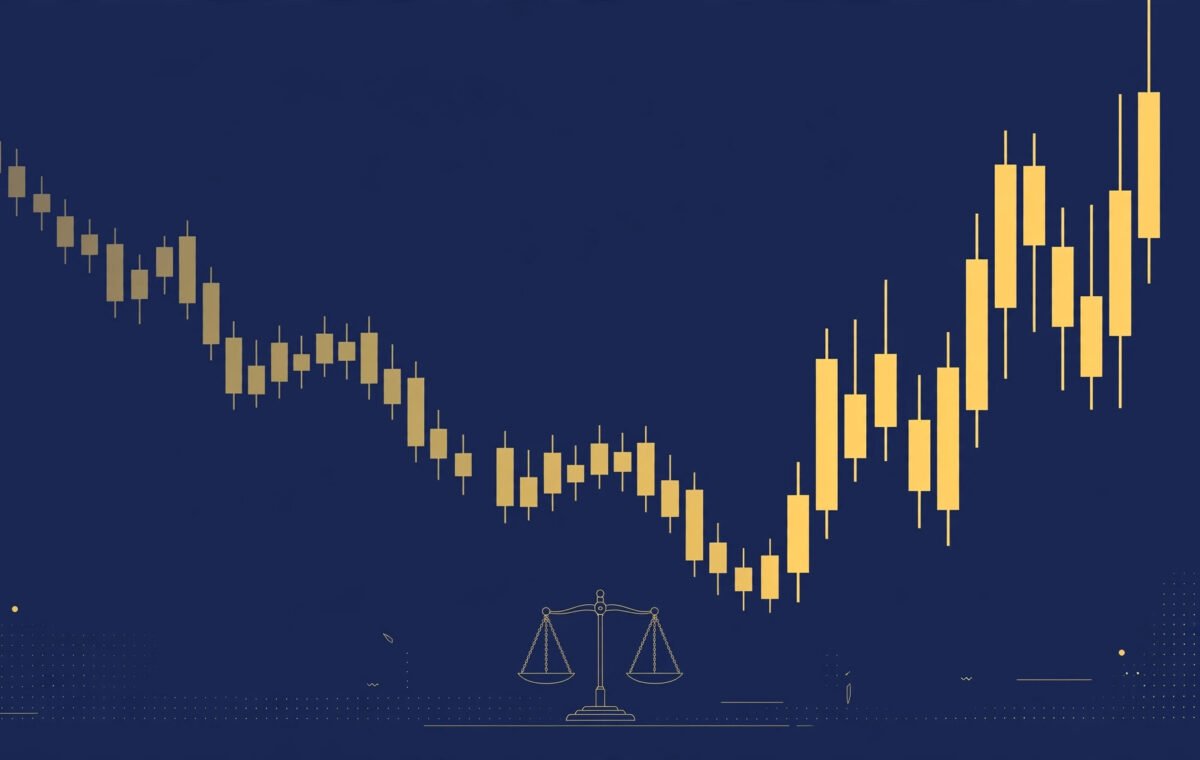
Every investor knows the standard sequence: buy low, sell high. Short selling runs the film backwards. The seller offloads shares first, at today’s price, and hopes to buy them back later for less. The twist — the one that explains almost everything strange about this corner of the market — is that the shares sold are not the seller’s. They are borrowed, they carry a rent, and they must be returned. A short seller is not an owner taking a view. A short seller is a tenant with a deadline.
That single fact drives the strategy’s usefulness and its danger. Short sellers supply the market’s only organised scepticism: participants paid to read the footnotes, question the story, and put capital behind a negative view. They also operate under the most unforgiving arithmetic in finance. A buyer can lose, at most, what was paid. A seller of borrowed shares can lose more than the entire value of the original sale — there is no ceiling on what those shares might cost to buy back.
Key Takeaways
- Short selling means borrowing shares, selling them, and buying them back later to return them — profit comes from a fall, not a rise.
- The maximum gain is capped at the sale proceeds, but the potential loss is unlimited, because a share price can keep rising.
- Crowded shorts can trigger a squeeze: forced buying by sellers covering their positions pushes the price up further, as GameStop in 2021 and Volkswagen in 2008 showed.
The mechanics: borrow, sell, cover, return
A short sale has four steps, which the SEC describes plainly in its investor bulletin.
First, the seller borrows shares. The lender is usually the seller’s own brokerage, drawing on its inventory, on shares held in other clients’ margin accounts, or on another lender. Most people whose shares are lent out never notice — the lending happens behind the scenes.
Second, the borrowed shares are sold into the market at the prevailing price. The cash lands in the seller’s account, but it is not free money — it is collateral against an obligation. The seller now owes shares, not dollars.
Third, the seller waits. This is the expensive part. The brokerage charges interest on the stock loan for as long as the position stays open, and hard-to-borrow stocks — usually the most heavily shorted ones — cost far more to borrow than liquid large-caps. If the company pays a dividend while the shares are on loan, the short seller must pay it to the lender out of pocket. Time, in a short position, is a meter running against you.
Fourth, the seller closes the trade by buying the same number of shares and returning them to the lender. This is called covering. Profit or loss is the difference between the sale price at step two and the purchase price at step four, minus interest, fees and dividends owed.
Because the seller trades with borrowed property, the arrangement runs through a margin account. The broker requires collateral, monitors the position daily, and can demand more cash — a margin call — if the price moves against the seller. If the seller cannot pay, the broker can close the position itself, buying back shares at whatever price the market offers. That loss of control over timing is what turns a bad short into a catastrophic one.
The arithmetic, worked through
The SEC’s teaching example uses a stock at $60. Extend it to 500 shares and the bet’s shape becomes clear.
The trade that works. You borrow 500 shares and sell them at $60. Proceeds: 500 × $60 = $30,000. The stock falls to $40, as you expected. You buy back 500 shares for 500 × $40 = $20,000, return them, and keep the difference: $30,000 − $20,000 = $10,000 gross profit, before borrowing interest, commissions and any dividend you owed while the position was open.
The trade that doesn’t. Same entry: 500 shares sold at $60 for $30,000. This time the stock rises to $80. Covering costs 500 × $80 = $40,000. Your loss is $40,000 − $30,000 = $10,000, plus costs — on a position where the shares you sold were only ever worth $30,000.
The trade that breaks the account. The stock does not stop at $80. At $120, covering costs $60,000 and the loss is $30,000 — the entire original sale value. At $180, the loss is $60,000, twice what the sale raised. Nothing stops the trade hurting on its own.
Now compare the two sides of the same stock:
| Long (buyer) | Short (seller) | |
|---|---|---|
| Opening move | Buys 500 shares at $60 ($30,000 out) | Borrows and sells 500 shares at $60 ($30,000 in, held as collateral) |
| Best case | Unlimited — the price can rise without limit | The price falls to $0; maximum gain is the full $30,000 |
| Worst case | Price falls to $0; loss capped at $30,000 | Unlimited — the buyback price has no ceiling |
| Cost of waiting | None, beyond opportunity cost | Borrow interest, plus any dividends owed to the lender |
| Who controls the exit? | The buyer, always | The seller — until a margin call or a recall of the loan takes the choice away |
Read the middle rows again, because they are the whole story. The short seller’s best outcome is fixed on day one: the most that can ever be made is the $30,000 the shares sold for, and that requires the company to go to zero. The worst outcome has no fixed size. Short selling is a strategy with a capped prize and an open-ended penalty — which is why position sizing and exit discipline matter more here than in almost any other trade.
Reading the crowd: short interest and days to cover
Because every short position must eventually be bought back, the size of the crowd already in a trade is public information.
Short interest is the total number of a company’s shares sold short and not yet covered. In the United States, brokerage firms report short positions to FINRA twice a month, around the middle and end of the month, and the data is published with roughly a two-week lag. Two ratios make that raw count readable:
- Short interest as a percentage of float — shares sold short divided by the shares actually available to trade. Above 10% reads as heavily shorted; above 20% is extreme.
- Days to cover (the short interest ratio) — shares sold short divided by average daily trading volume. It estimates how many sessions it would take every short seller to exit, assuming they were the only buyers. Five days or more means a crowded, slow exit.
Neither number tells you whether the short sellers are right — heavily shorted companies are often shorted for good reason. What the numbers tell you is how the trade behaves if the price starts rising: a stock with 25% of its float sold short and six days to cover has a large pool of forced buyers inside it. Every short seller is a future purchase already committed to. That is the fuel of a short squeeze.
What history shows: when the exit gets crowded
A short squeeze is what happens when the arithmetic above meets the crowd above. The price rises — for any reason, or none. Losses mount, margin calls arrive, sellers begin covering, and their buying pushes the price higher, worsening the losses of everyone still short and forcing more covering. The sellers stop being analysts and become a queue at a narrow door. Two episodes show how far that loop can run.
GameStop, January 2021. The video-game retailer was a struggling mall business in a download world, and professional investors had bet heavily on its decline. At the peak, short interest reached roughly 140% of the shares available — a figure above 100% is possible because a borrowed share, once sold, lands in a new owner’s account and can itself be lent and sold again. Retail buyers, organising online, saw the crowded trade and bought. GameStop closed at $17.25 on January 4, 2021; on January 27 it closed at $347.51, and the next morning it traded as high as $483 intraday. Melvin Capital, a hedge fund short the stock for years, lost 53% of its value in January alone, took a $2.75 billion emergency investment from Citadel and Point72, and closed its position. It never fully recovered and shut down in May 2022. Note what did not happen: nothing about GameStop’s stores or prospects improved twenty-fold in three weeks. The price was not a verdict on the business. It was the sound of forced buyers meeting a limited supply of shares.
Volkswagen, October 2008. The same loop, triggered by disclosure rather than social media. Hedge funds had shorted Volkswagen, expecting its premium valuation to deflate during the financial crisis. On Sunday, October 26, Porsche revealed it held 42.6% of Volkswagen directly plus options taking its economic exposure to 74.1% — and the state of Lower Saxony held about another 20%. With roughly 12.8% of the shares sold short, the sellers suddenly faced a market in which almost no shares were available to buy. Over two sessions the price more than quadrupled, touching €1,005 intraday on October 28 and closing at €945, for a market value of about €287 billion — briefly making a mid-sized carmaker the most valuable company in the world, ahead of Exxon. Within days the price fell back. Again, the business had not changed. The float had.
The lesson common to both episodes is precise: a short squeeze is not proof the short sellers’ analysis was wrong. GameStop’s business challenges were real, and Volkswagen was not worth €287 billion. Squeezes are a failure of positioning and liquidity, not necessarily of research — too much borrowed stock, held alongside too many others doing the same, in a float too small to let them all out.
Where this breaks down
Short selling has failure modes no amount of good analysis removes:
- Being right is not enough; you must be right on schedule. A long investor in a sound company can wait out a bad year. A short seller pays interest every day, owes every dividend, and can be forced out by a margin call at the worst moment — weeks before the thesis plays out. The market’s timetable and the loan’s timetable are different clocks.
- The loan itself can disappear. Borrowed shares can be recalled. If the broker cannot find a replacement borrow, the position is closed at the market price, at a moment not of the seller’s choosing.
- Costs can eat the thesis. For a heavily shorted stock, annual borrowing fees can consume a large share of any eventual decline. A stock can fall exactly as predicted and the trade can still lose money after a year of rent.
- Takeovers cap your research, not your loss. A shorted company that receives a takeover bid can gap up sharply overnight. There is no session in which to reconsider; the loss simply exists at the open.
- Rules change mid-game. Regulators have repeatedly restricted short selling during crises, and brokers restricted buying in certain stocks during the GameStop episode. The short seller is exposed not only to price risk but to the risk that the terms of trading shift mid-position.
One boundary is worth stating clearly: ordinary short selling is legal and, as the SEC notes, serves purposes beyond speculation, including hedging a long position and supplying shares when buyers want them. What regulators prohibit is manipulation: spreading false information to push a price down, or selling shares the seller has not borrowed and cannot deliver (“naked” shorting). The line is not the direction of the bet. It is honesty about the position behind it.
Why markets keep their sceptics anyway
Given that risk profile, it is fair to ask why anyone does this — and why exchanges permit it. The practical answer is that short sellers do work no one else is paid to do. They press on overpriced stocks before the disappointment rather than after it, they provide shares to buyers in thin markets, and they let hedgers offset risk without dumping positions they intend to keep. Some of the most consequential fraud exposures in market history began as short sellers’ research. Remove the ability to sell borrowed shares and prices do not become more accurate; bad news simply arrives later, and all at once.
For the reader of market news, the takeaway is simpler. When a headline reports a stock is “heavily shorted,” it is not reporting a forecast. It is reporting a structure: a capped prize, an uncapped loss, a meter running, and a crowd of committed future buyers between the short sellers and the exit. Sometimes that structure is a footnote. Twice in thirteen years — in Wolfsburg in 2008 and in American mall retail in 2021 — it was the entire story.
Further reading: What Is a Stock Index? · Market Cap, Explained · The P/E Ratio, Decoded
Market Briefer publishes market commentary for informational purposes only, not investment advice.